What is a log and kindling basket?
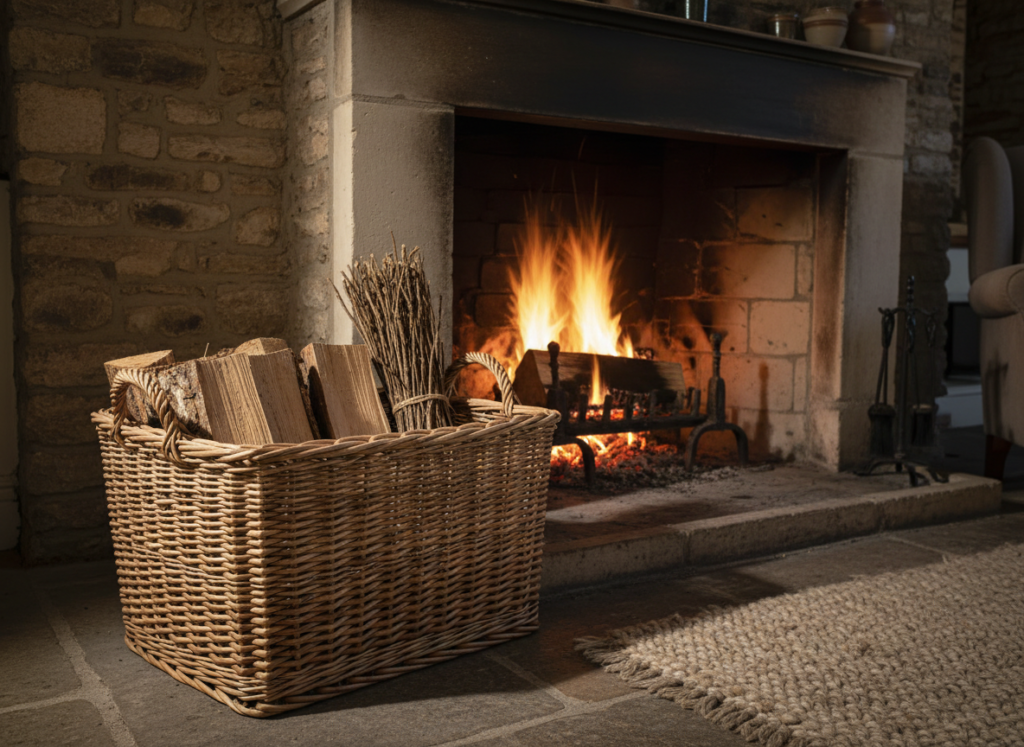
A log and kindling basket is exactly what it sounds like: a fireside basket designed to hold both split logs and kindling sticks together in one place. Some have a dedicated inner section or tray for kindling, keeping the smaller pieces separate from the heavier logs. Others are simply large enough to hold a mixed load — logs at the back, kindling at the front or to one side.
The appeal is practical. When you are lighting a fire, you want kindling within reach without having to go back and forth. A single basket by the hearth that holds everything you need for the first hour of a fire makes the whole process easier.
Most log and kindling baskets are made from natural willow or wicker, which suits the fireside environment well. The weave is open enough to let air circulate around the wood, and the natural material looks at home beside most fireplaces.
Do you need a separate space for kindling?
Not necessarily, but it does make things easier. If you light a fire daily, having kindling ready to grab without sorting through a pile of logs is a genuine convenience.
A basket with a built-in kindling section — usually a smaller inner basket or a divided lower compartment — keeps things tidy and makes fire-lighting faster. You can see at a glance when kindling is running low, and there is no risk of the small pieces falling through or getting buried under heavier logs.
If you light fires less often, or if you tend to stack kindling separately anyway, a standard log storage basket with a generous capacity works just as well. A deep wicker basket that holds a good armful of logs can also take a bundle of kindling along one side without any dedicated separation.
Practical note: If you buy kindling in wrapped bundles, a basket with a flat base and straight sides makes it easier to stand bundles upright alongside your logs, rather than having them roll about.
What size log and kindling basket do you need?
Size is the most important decision after style. Too small and you are restocking constantly. Too large and the basket dominates the hearth and looks out of proportion.
A good starting point is to think about how long you want a filled basket to last. A basket that holds roughly a single evening’s worth of logs — around 10 to 15 split logs — is a practical size for most homes. Add kindling on top of that and you are looking at a medium to large basket.
Rough size guide
There is no universal standard for basket sizing, but as a general rule:
- Small baskets (around 35–40 cm wide) hold a handful of logs — useful in rooms with limited hearth space, or where logs are stored close by and restocked easily.
- Medium baskets (around 45–55 cm wide) hold a decent evening’s supply — the most common choice for living rooms and sitting rooms.
- Large baskets (60 cm and above) hold a generous load, suit homes where the fire is lit most evenings, and reduce how often you need to restock.
If your basket is also holding kindling, lean toward the next size up. Kindling takes up more space than you expect, particularly if you store it in bundles rather than loose sticks.
Occasional fire lighting
A medium basket with a simple open design is plenty. You can stack logs and kindling separately as needed.
Daily fire lighting
A larger basket — or one with a dedicated kindling section — saves time and means you are not restocking every session.
Lined vs unlined log and kindling baskets
Wicker and willow log baskets are available with or without a fabric or felt lining. For log storage, lining is less common than for shopping or storage baskets — most log baskets are unlined so bark and debris can fall through the weave rather than collect inside.
An unlined basket is generally the better choice for fireside use. Logs and kindling shed bark, sawdust, and small fragments of wood. An open weave lets this material fall through to the floor or a hearth rug below, where it is easy to sweep up. A lined basket traps the debris inside, which means more frequent cleaning.
Some baskets have a partial lining — just along the bottom section — which keeps the basket base cleaner without trapping debris around the sides. This can work well if you want to protect a wooden floor directly beneath the basket.
Wicker, willow, and what the material tells you
Most log and kindling baskets described as “wicker” are made from natural willow. Wicker refers to the weaving technique — the willow is the material. You may also see sea grass, rattan, or seagrass blends used for baskets sold as log baskets, though natural willow is the most traditional choice for fireside use.
Natural willow is sturdy, flexible, and handles the weight of logs well when the basket is properly constructed. Look for a basket with a solid wooden base or a reinforced bottom frame. Log baskets carry significant weight when full, and the base takes most of the stress.
Handles are worth checking too. Rope handles offer a good grip and tend to stay comfortable even with a heavy load. Woven wicker handles work well for moving a partially filled basket, but can bite into hands when carrying a full load. If you are lifting and carrying frequently — for example, from a log store outside to the fireplace inside — rope or leather handles are worth looking for.
Worth checking: When buying any log basket, look at how the handle is attached to the basket body. A handle fixed with twisted wire or staples may not hold well over time. Look for handles that are woven directly into the basket structure or secured through a solid wooden base.
Choosing a basket that fits your room
A log and kindling basket lives by the fireplace, which makes it one of the more visible pieces of storage in a room. It is worth taking a moment to match the basket to the space.
Natural wicker and willow suits most settings — stone fireplaces, brick fireplaces, log-burner surrounds, and built-in alcoves alike. The tone of the willow makes a difference. Buff willow (pale honey) is the most common and suits lighter, neutral rooms. Brown or smoked willow gives a richer, deeper look that works well in darker rooms or with exposed timber features.
Think about the shape of the hearth space too. A wide, low basket suits a wide fireplace opening. A taller, narrower basket works better in a smaller alcove or beside a log-burning stove where floor space is limited.
Matching basket size to hearth space
Measure the floor space you have available before buying. Leave enough room to open the fire door or access the firebox without moving the basket every time. A basket that sits neatly to one side is more practical than one that takes up the full width of the hearth.
What to look for before you buy
Here is a quick checklist for finding a log and kindling basket that will hold up well:
- Solid base: A wooden base or reinforced frame at the bottom is essential for a basket that will hold heavy logs regularly.
- Strong handles: Rope handles or well-woven wicker handles that are anchored firmly to the basket structure — not glued or stapled on.
- Open weave: Allows bark and debris to fall through rather than collect inside.
- Appropriate capacity: Large enough to hold a useful amount of logs and kindling without overwhelming the hearth space.
- Natural materials: Willow and wicker are traditional choices that look right beside a fire and last well when kept dry.
Avoid baskets that feel flimsy when empty — if the structure flexes noticeably with no weight in it, it will not hold up to a full load of logs for long.
Frequently asked questions
Browse log baskets at Peak Sales
If you are looking for a log basket to store both logs and kindling beside your fire, browse the full range at Peak Sales. All baskets are available with nationwide delivery.
Related reading: Log Basket for the Fireplace: How to Choose the Right One.