Quick answer
For a fireplace, you want a log basket that is tall enough to hold a decent stack of logs upright, wide enough to fit your log length, and sturdy enough to carry a heavy load without the handles pulling. Wicker and willow baskets are the traditional choice — they are lightweight, look good beside a hearth, and are easy to carry between the log store and the fireplace. Lined baskets are worth considering if bark and debris are a problem.
Getting the size right for your fireplace
Size is the most important decision. A basket that is too small will need refilling constantly. A basket that is too large will dominate the space beside your fireplace and be difficult to move when full.
Match the basket to your log length
Most firewood in the UK is cut to around 25 cm (10 inches) for log burners, or slightly longer — up to 40 cm (16 inches) — for open fireplaces. Before you buy, measure your logs and check the internal diameter of the basket. The logs need to sit inside the basket without being forced in at an angle, which puts stress on the weave and makes the basket harder to carry.
As a rough guide: a small log basket (around 30 cm diameter) suits short logs for a log burner. A medium basket (35–45 cm) handles most standard firewood. A large basket (50 cm or more) is right for longer logs or if you prefer to refill less often.
Think about capacity, not just size
A taller basket holds more logs upright, which is generally the tidiest arrangement. A shallower, wider basket holds a larger volume but logs tend to topple sideways. For a fireplace where you want the basket to look neat rather than just functional, a taller design usually works better.
Think about how often you want to refill it. For an evening fire, a medium basket holding 8–10 logs is usually enough. If you have an open fireplace that burns through logs quickly, or you want to avoid multiple trips to the log store, a large basket makes more sense.
Consider the space beside your hearth
Fireplaces come in very different sizes — from a small inset burner in a modern terrace to a wide inglenook in an older property. Measure the space you have available, including height clearance if your basket will sit inside or beneath a surround. A basket that is too wide will jut out into the room; one that is too deep may not sit flush against the wall.
Simple rule: Measure your logs first, then your available floor space beside the fireplace — width and depth. The basket needs to fit both comfortably before you think about style.
Shape options for a fireplace log basket
Log baskets come in a few different shapes, and the shape affects how well the basket fits beside a fireplace in practice.
Round or oval
The most common shape. Oval baskets tend to work well beside a fireplace because the longer axis gives more room for logs without the basket sticking too far out from the wall. Round baskets look neat and symmetrical but can take up slightly more floor space relative to capacity.
Rectangular
Rectangular log baskets sit flush against a wall very neatly and maximise the amount of wood you can fit in a given footprint. They tend to look more contemporary and work well in modern settings or alongside a clean-lined stove surround.
Tall vs squat designs
A tall, narrow basket keeps logs upright and takes less floor space — useful if you have a smaller hearth area. A squat, wider basket sits lower and can look more traditional, especially in a stone fireplace or period home. Both work equally well for the practical job; the choice is mostly about what suits your room.
Wicker, willow, and other materials — what works best at the fireplace
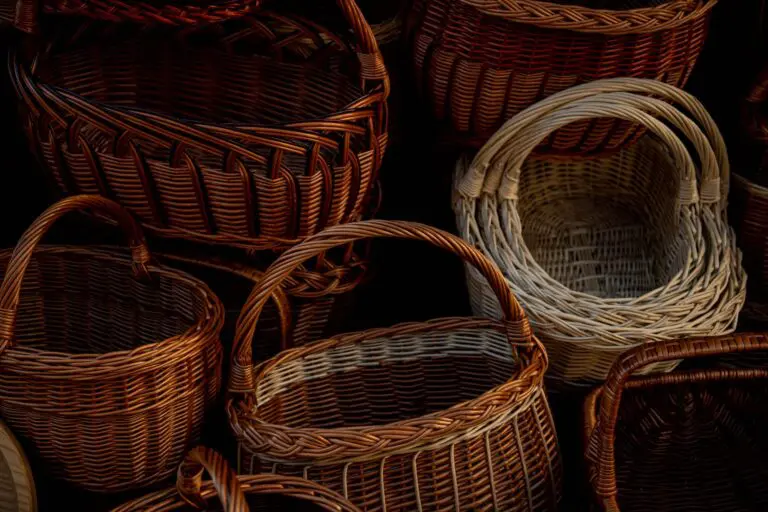
Most log baskets designed for fireplace use are made from wicker or willow — both natural materials that have been used for this purpose for a very long time. Here is how they compare and what to look out for.
Wicker and willow
Wicker and willow baskets are lightweight, relatively strong for their weight, and look at home beside a traditional fireplace. They do not add much weight themselves, which matters when you are carrying a basket loaded with logs. Natural wicker and willow also tend to improve in character over time — the patina that develops with use suits a fireside setting well.
The main consideration is that wicker and willow are not impervious to bark, debris, and small pieces of wood that fall through the weave. A lined basket — one with a fabric or felt lining inside — keeps the debris in the basket and off your floor. If bark mess beside the fire bothers you, a lined option is worth looking for.
What to check for strength and durability
A full load of firewood is heavy. The handles take most of the strain when you lift and carry the basket. Look for handles that are thick, well-attached, and sit comfortably in your hand — a thin handle on a heavy basket will cut into your palm and is more likely to pull loose over time.
Check that the base is solid and reinforced. Some baskets have a solid wooden or thick woven base that spreads the weight of the logs evenly. Baskets with a flimsy base can sag and eventually split under the repeated weight of firewood.
Lined log baskets — are they worth it?
A lined log basket has a fabric lining — usually canvas, felt, or a similar material — fixed inside the weave. The lining catches bark, sawdust, and small wood fragments that would otherwise fall through the basket and collect on the floor.
For most people with a fireplace in a carpeted living room or a room with light-coloured flooring, a lined basket is a practical improvement. It keeps the area around the hearth noticeably tidier. The lining does not affect how the basket carries or how it looks from the outside.
The trade-off is that lined baskets are slightly harder to clean — debris collects in the lining rather than falling through — so you will need to shake the lining out every so often. Most linings are either removable or can be brushed out easily.
If your fireplace is on a stone or tiled hearth and bark debris is not a concern, an unlined basket works just as well and is often slightly lighter.
Where to position a log basket beside the fireplace
Placement makes a real difference to how useful the basket is day to day and how good it looks in the room.
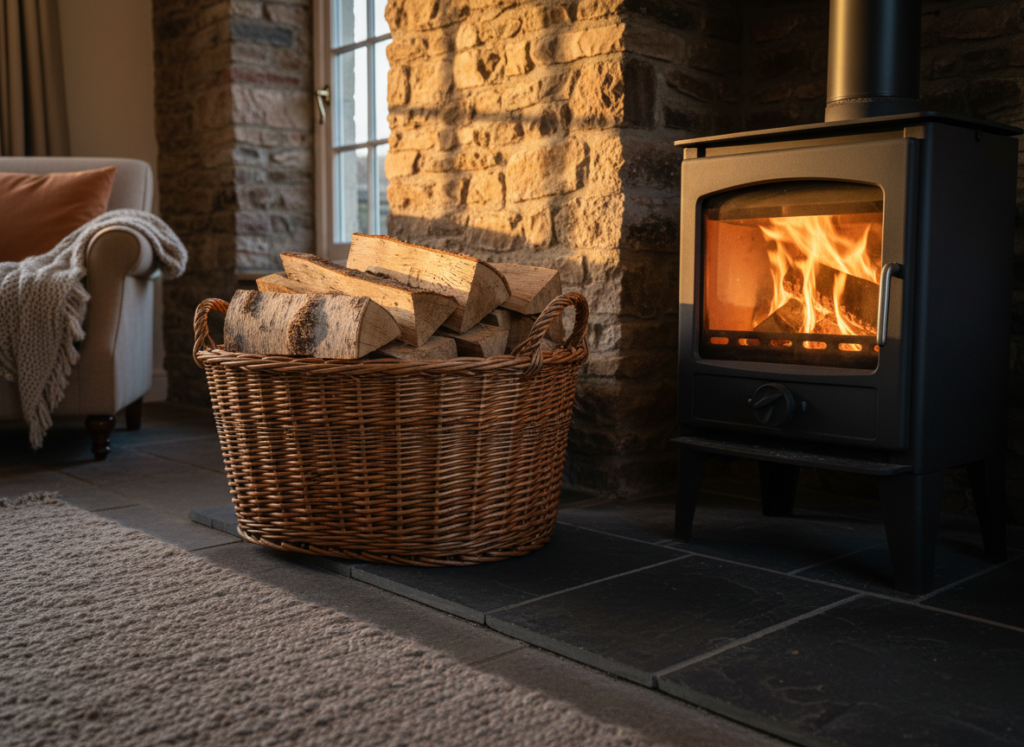
- Keep it within arm’s reach of the fireside. You want to be able to add a log without getting up and crossing the room. One to two steps from the fire is ideal.
- Give it enough clearance from the fire itself. Do not position the basket so close that it is in the direct path of sparks or heat. A sensible distance — typically half a metre or more — keeps the basket out of any risk.
- Flat, stable ground. A log basket full of firewood is heavy and should sit on a flat, stable surface. On uneven stone or a thick rug, make sure the basket sits level before filling it.
- Consider the visual balance of the hearth. A log basket to one side of the fireplace, balanced perhaps by a companion set or a plant on the other, tends to look considered rather than an afterthought.
Log basket sizes at a glance
| Basket size | Suits log length | Approx capacity | Best for |
|---|---|---|---|
| Small | Up to 25 cm | 6–8 logs | Log burners, occasional fires |
| Medium | Up to 35 cm | 8–12 logs | Standard open fireplaces, regular use |
| Large | Up to 45 cm | 12–18 logs | Inglenook fireplaces, frequent fires |
FAQs
Cannibalisation check: Run 2’s “how-to-choose-a-log-basket” covered the general fireside log basket choice. This post targets the more specific “log basket for fireplace” and “fire log basket” query cluster — fireplace-specific placement, sizing for open fires vs burners, and lined vs unlined — which are distinct angles not covered in the earlier post. Supports the /log-baskets/ category page.