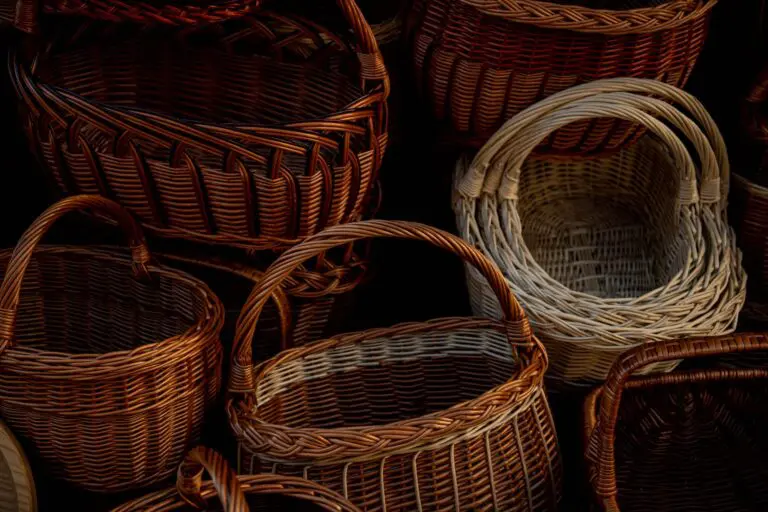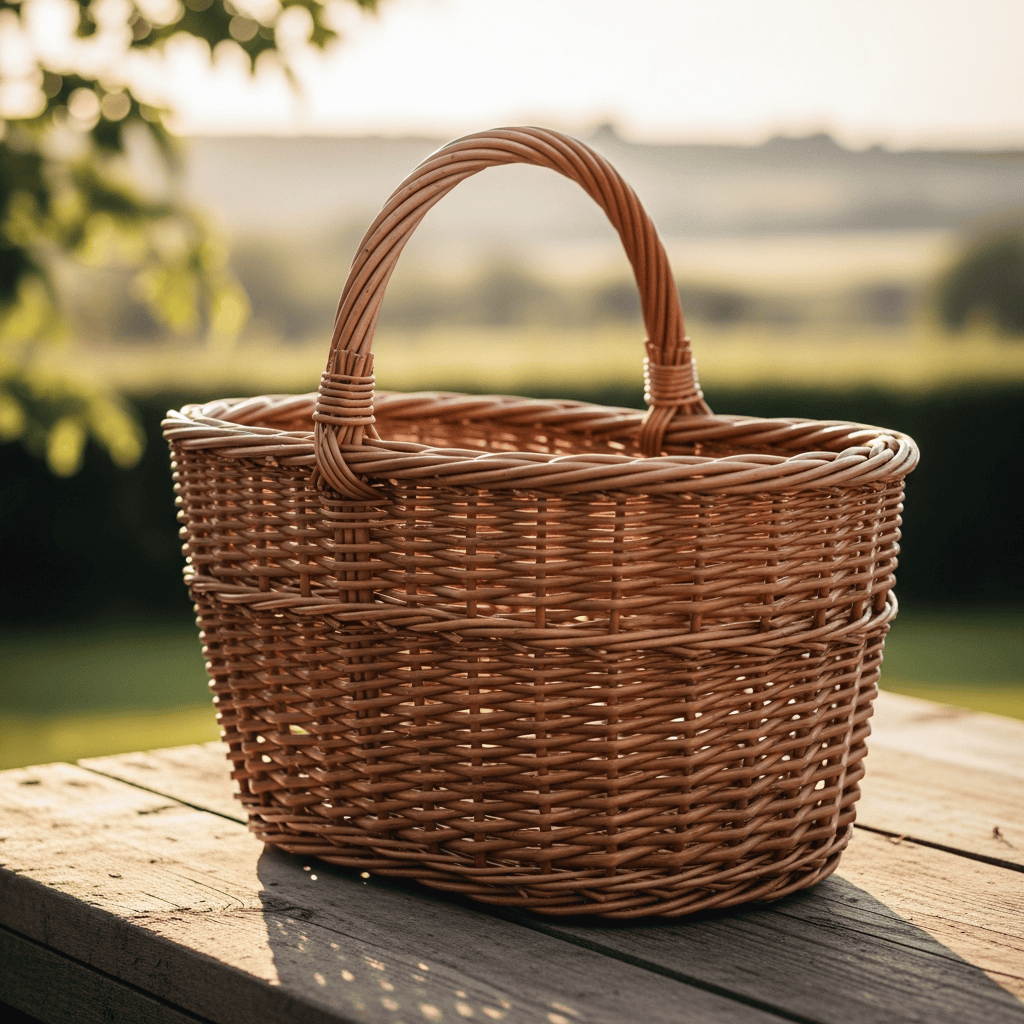
A wicker shopping basket is one of those things that earns its keep quietly. Use the right one and you barely think about it — it holds what you need, sits well in the hand, and looks considerably better at the farmers’ market or farm shop than a crumpled plastic bag. Use the wrong one and you notice it every single time: handles that cut into your palm, a base that tips when you put it down, or a weave that spreads under a modest load.
Natural willow shopping baskets have been part of everyday life for centuries. Willow is harvested annually — the plant regrows from the same root each year — making it one of the more genuinely renewable materials in everyday use. A well-made wicker shopping basket can handle years of regular carrying before showing any real wear. The challenge is knowing what to look for.
Quick answer: Choose a wicker shopping basket with a wide, flat base for stability, a handle length that lets you carry it over your forearm rather than just in the hand, and a tight, even weave throughout. For regular use, a medium-sized open basket in the 35–45 cm range balances capacity with comfortable carrying weight.
Construction: what separates a good basket from a poor one
The weave is the most reliable quality indicator you can check. Run a hand along the outside of the basket: the rods should feel consistent and the surface smooth rather than rough or uneven. Look at the weave pattern from the side — the rows should be tight and parallel, with no noticeable gaps where the willow rods are thinner or where they have been pushed apart to cover ground more quickly.
Pay attention to the corners and the rim. These are the areas that take the most stress during regular use, and they are where a poorly made basket will start to show wear first. The rim should be wrapped firmly, with no loose ends or gaps. On a quality basket, the rim feels solid when you squeeze it gently.
The base matters more for a shopping basket than for a decorative one. A wide, flat base lets the basket stand upright while you load it and distributes weight evenly when carried. A narrow or rounded base tips easily and puts uneven pressure on the sides of the weave. If you intend to put the basket down on rough surfaces, check whether the base has added protection — a wooden base board or a thicker woven base layer both help.

Handle types and why they matter more than you might think
The handle is where most of the day-to-day experience of using a shopping basket lives. The wrong handle makes a comfortable basket uncomfortable the moment you put anything in it.
Swing handles — the two arched handles that fold out from either side — are the most common type on traditional wicker shopping baskets. They work well for lighter loads and are comfortable to carry in the hand or over the wrist. When the basket is heavy, they can concentrate a lot of pressure into a small grip area.
Fixed loop handles sit permanently upright and are woven directly into the basket structure. They tend to be sturdier and distribute weight more evenly along the handle arc. The trade-off is that tall items can be harder to pack, since the handles cannot fold flat out of the way.
Over-arm handles are longer than the typical basket handle, with enough length to carry the basket over your forearm rather than gripping it in the hand. This makes a real practical difference when you are walking around a market or carrying the basket for more than a minute or two. A fully loaded basket hangs from the forearm instead of cutting into the palm — significantly more comfortable for any meaningful distance.
If you plan to use the basket regularly and carry it with any weight in it, over-arm handles or longer fixed handles are worth seeking out.
Size: matching capacity to how you actually shop
Shopping baskets cover a surprisingly wide range of sizes, and the right one depends almost entirely on how you plan to use it.
A small basket in the 25–32 cm range is ideal for a few items — bread, a bottle of something, some fruit from a stall, or everyday small errands. It is light when empty and easy to carry, but limited in what it can hold.
A medium basket in the 35–45 cm range handles most everyday shopping tasks comfortably. It holds a reasonable selection of groceries, a bottle or two, and some loose produce without straining at the sides. This is the most versatile size for general use.
A large basket above 45 cm gives the most capacity but becomes noticeably heavy when fully loaded. For heavier shopping, the base and handle quality become more important. If you are regularly carrying a lot, check that the basket feels solid when you press on the sides, and that the handles are long enough to give you a proper grip.
Willow vs rattan: does the material make a difference?
Most UK wicker shopping baskets are made from willow or rattan. Willow is the traditional UK choice — it bends well during weaving, has a warm natural colour, and produces a firm, slightly textured surface. Willow baskets tend to have a lighter feel than rattan ones of the same size, which matters if the basket is going to be carried frequently.
Rattan is a tropical plant that produces a denser, smoother weave. Rattan shopping baskets often feel heavier than willow ones and have a more uniform appearance. They are very durable and handle moisture reasonably well. For most everyday shopping use, willow provides perfectly adequate durability with a lighter carry.
How to get the most from your shopping basket
A well-made wicker basket looks after itself reasonably well as long as you treat it sensibly. Avoid overfilling — the sides and handle attachment points are the first areas to show stress, and overloading regularly shortens the life of any basket. If you are carrying something heavy or with sharp packaging, a cloth bag inside the basket distributes the weight and prevents the weave from catching on edges.
Damp shopping is worth thinking about. Willow handles a little moisture without issue, but a basket that stays wet for any length of time may start to lose shape or develop mould in the weave. If it gets wet, let it dry somewhere airy before putting it away. Store it in a dry place away from radiators — heat dries the willow fibres out prematurely and makes them more likely to crack over time.
Browse the wicker shopping baskets range at Peak Sales, or explore the full shop to see our complete collection of handcrafted wicker baskets. For basket gifting ideas, our hamper range and basket guide are a good place to start.
Written by the Peak Sales Team — based in the Peak District, helping customers find the right handcrafted wicker basket for home and everyday use. Published September 2026.
Frequently asked questions
What is the difference between a wicker shopping basket and a hamper?
A shopping basket is open-topped and designed for carrying everyday items by hand. A hamper usually has a lid and a more structured interior, suited to gifting or picnic use. Shopping baskets prioritise ease of loading and comfortable carrying over presentation.
Can I use a wicker shopping basket for groceries?
Yes. A wicker shopping basket handles lighter grocery trips well — fruit, vegetables, bread, jars and packaged goods. For heavier loads, look for a basket with a wide, flat base and reinforced handles so the weight stays comfortable and the sides do not flex.
Are wicker shopping baskets eco-friendly?
Natural willow and wicker baskets are made from renewable plant material. Willow regrows from the same root after harvesting, making a good wicker basket a long-lived, natural alternative to single-use plastic bags or synthetic totes.
How do I clean a wicker shopping basket?
Dust it regularly with a dry brush or soft cloth. For deeper cleaning, wipe with a slightly damp cloth and mild soap, then air dry completely away from direct heat. Never soak a wicker basket in water as this causes the fibres to swell and lose shape.