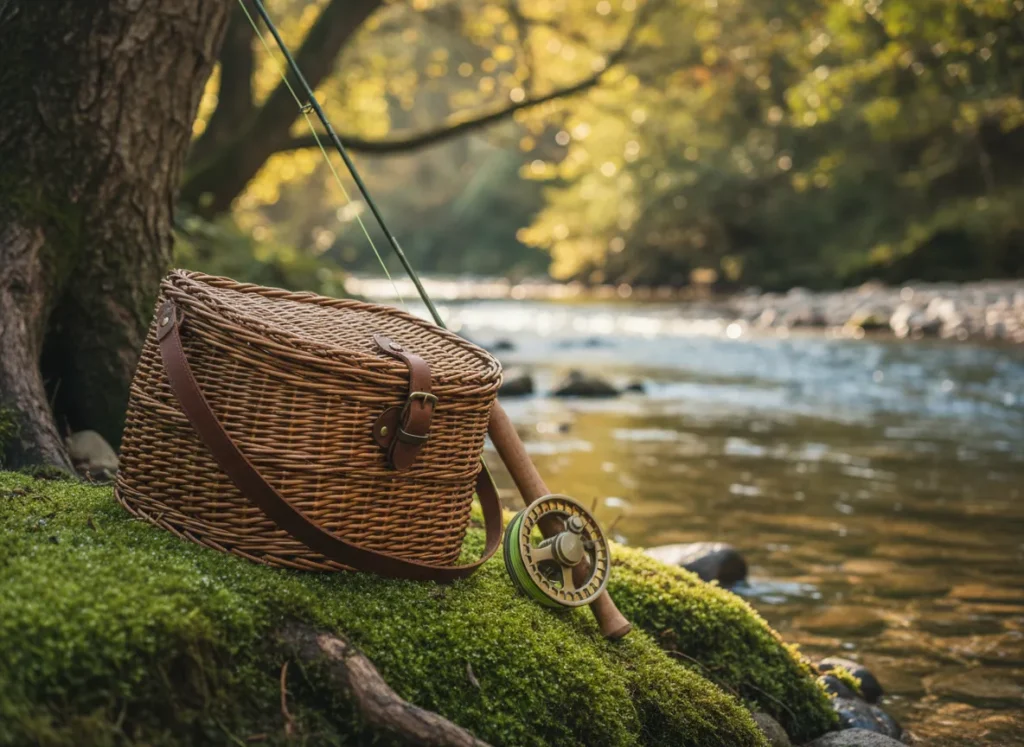
What is a fishing creel?
A fishing creel is a woven basket, traditionally made from willow, used by anglers to keep caught fish fresh while out on a riverbank or lochside. The basket is worn over the shoulder or carried by a strap, and it typically has a hinged or folding lid with a slotted opening — wide enough to drop a fish through without fully opening the basket, which helps keep the contents cool and contained.
Creels have been used for centuries and remain a practical piece of kit for fly fishing in particular, where the angler moves along the water’s edge and needs a hands-free, lightweight carrying option for the day’s catch. The wicker construction allows air to circulate around the fish, and the damp interior of a creel (often lined with damp grass or bracken) keeps fish in better condition than a sealed plastic bag or box.
Today, creels are also purchased as decorative pieces and thoughtful gifts for anglers, particularly those who appreciate traditional fishing tackle and methods.
Types of fishing creel
While the basic design is consistent — woven basket, shoulder strap, hinged lid — fishing creels come in a few variations worth knowing about.
Classic fly fishing creel
The traditional design used by river anglers. Usually roughly D-shaped or oval, with a flat back that sits against the body comfortably. The hinged lid has a slot opening for easy fish access. Worn on the opposite hip to the rod hand.
Trout picnic creel
A variant designed to double as a picnic basket or carrying basket as well as a fishing creel. Usually slightly larger, with a full-opening lid and sometimes additional space for food or drink. Suits anglers who spend a full day on the water.
Both types are available in natural willow weave. The classic fly fishing creel tends to be the more compact of the two; the trout picnic creel offers more versatility for a full day out.
Good to know: Some anglers now use a damp creel without fish inside as a cooled lunchbox for riverbank days — the willow construction and cool, damp interior works surprisingly well for keeping food cool on a warm day.
Why willow for a fishing creel?
Willow has been the material of choice for fishing creels for a long time for practical reasons. It is lightweight, which matters when you are wearing the basket on a strap for several hours. It is naturally strong and resistant to the wet conditions that fishing involves. And the open weave allows air to circulate, which is important for keeping fish fresh.
A woven willow creel also has a natural flexibility — unlike a rigid plastic box, it can sit comfortably against your body as you move along the bank, adapting slightly to your shape rather than digging in at the edges.
Green willow vs natural dried willow
Natural dried willow (buff willow) has the familiar warm honey-brown colour associated with traditional wicker. Green willow is cut while still fresh and has a more muted, natural tone. Both are used in creel construction. Dried willow tends to be slightly more rigid; green willow can be a little more supple. Neither has a significant functional advantage over the other for fishing use — it is largely a matter of appearance.
What to look for when choosing a fishing creel
If you are buying a creel for actual fishing use, a few practical points are worth checking before you commit.
Size and capacity
The right size depends on the type of fishing and how long you will be out. A compact creel is fine for a morning’s trout fishing on a small river where you expect to catch a few fish. If you plan to fish all day or target larger species, a bigger creel with more interior depth is worth considering. Most willow creels are sized for trout and similar river fish — they are not suited to very large catches.
The lid opening
The hinged lid with a slot or latch opening is one of the creel’s most important design elements. The opening should be large enough to drop a fish through easily, but not so large that the lid hangs open when the basket is tilted. Check that the lid hinges are solid and well-attached to the main body — this is the joint that takes the most wear over time.
Strap quality
A shoulder or body strap is typically included with a fishing creel. The strap should be long enough to adjust for your height and body size, and the attachment points should be fixed securely to the basket — either to a reinforced willow loop or a metal ring. A poorly attached strap is the most common failure point on cheaper creels.
Interior lining
Some creels include a fabric or waterproof interior lining; others are plain wicker throughout. A lined creel is easier to clean after use, especially if fish have been inside. A plain wicker interior is more traditional and allows more airflow, but requires a more thorough clean after use to prevent odour from building up.
Fishing creels as gifts for anglers
A willow fishing creel makes a distinctive and practical gift for a fly fishing enthusiast. It is the kind of item many anglers appreciate but would not necessarily buy for themselves — partly because of tradition (a creel handed down or gifted feels more meaningful than one bought online), and partly because creels sit at the more characterful end of fishing kit.
When buying as a gift, it is worth checking the following:
- Does the recipient use a creel? Some modern fly fishing setups use a catch-and-release approach where no creel is needed; others fish to keep. A creel makes most sense for anglers who keep fish, or who appreciate traditional tackle
- Classic or decorative? A traditional willow creel also works well as a display item in a fishing room, cottage, or study — you do not need to be an active angler to appreciate one as a piece of craft
- Consider the trout picnic variant: If the recipient spends long days at the water, the trout picnic creel with its larger opening and more versatile interior may be a better fit than a compact classic creel
Gift idea: A willow creel paired with a small selection of fishing accessories or packed with a simple riverside lunch makes a complete and personal gift for a keen angler.
Caring for a willow fishing creel
After use, empty the creel fully and rinse the interior with clean water to remove any residue from fish, damp grass, or bait. Allow the basket to dry completely in a ventilated space before storing. Avoid storing a damp creel in a sealed bag or box — it needs airflow to dry properly and prevent mould from developing inside the weave.
If the basket develops any smell from use, a light wipe with a diluted white vinegar solution followed by thorough drying is usually effective. Do not soak the basket or put it through a dishwasher.
The strap can be wiped down with a damp cloth and allowed to dry flat. If the leather or fabric shows signs of stiffening or cracking, a light treatment with a leather conditioner or fabric protector appropriate to the material will help extend its life.
Stored correctly between uses, a well-made willow creel should last many seasons.
Willow creels as decorative pieces
Beyond their fishing use, willow creels have a long history as display items. They are commonly seen in country cottages, fishing lodges, and rural interiors, either hung on a wall or placed as a decorative piece alongside other traditional craft items. The natural willow weave and characteristic shape make them recognisable and visually interesting even to people who do not fish.
If you are buying a creel purely for display rather than use, the finer details of lid function and strap quality matter less — focus instead on the quality of the weave and the overall shape and colour of the basket.
Common questions
Willow fishing creels at Peak Sales
We stock traditional willow fishing creels suitable for fly fishing use and as gifts for anglers. Our fly fishing creel is woven from natural willow and includes a shoulder strap. We also stock a trout picnic creel for anglers who want a larger basket suited to a full day at the water.
If you are looking for other wicker basket options, you can browse the full hamper and basket range or visit the Peak Sales shop for our complete collection.