Log Burner Basket vs Open Fireplace Basket: What’s the Difference?
The fundamental difference is how the fire is accessed. An open fireplace has a wide, flat hearth with room to stack logs beside or in front of it. A log burner is an enclosed stove with a smaller door opening — typically 25 to 35 centimetres wide — and a more compact footprint.
This changes what you need from a log basket. With an open fireplace, you can use a wide, round or oval basket because you’re loading logs horizontally across the hearth. With a log burner, you need a basket that fits beside the stove without blocking access to the door, and that holds logs at a length the stove can actually accept.
Most log burner owners position their log basket directly to the side or just in front of the stove. This means the basket needs to be the right height relative to the stove body, deep enough to hold a decent supply, and shaped so it doesn’t look out of place in the room.
Key distinction: If your stove accepts logs up to 25cm (10 inches), your basket needs to accommodate that length. A basket designed for open fireplaces — which often hold longer logs — may be too wide or too large for a stove setting.
What Size Log Burner Basket Do You Need?
Sizing a log basket for a wood-burning stove involves two measurements: the size of the basket itself and the length of logs it needs to hold.
Basket Footprint
A log burner basket typically sits in a hearth surround or on a tiled floor beside the stove. Most households have a hearth area of between 40 and 80 centimetres in width beside the stove. A basket that’s too wide will either overhang the hearth or block the room. A basket that’s too narrow won’t hold enough logs to get through an evening without refilling.
For most log burner settings, a basket with a base of around 40 to 50 centimetres in length and 25 to 35 centimetres in width is a practical starting point. This gives enough capacity for an evening’s worth of fuel without dominating the space.
Log Length
Log burners are designed for specific log lengths — typically 25cm (10 inches) for smaller stoves and up to 33cm (13 inches) for larger ones. Always check your stove’s recommended log length before buying a basket. The basket should hold logs comfortably without them protruding over the edge, which creates a trip hazard and looks untidy.
Capacity
A good rule of thumb: a log burner basket should hold enough wood to fuel two to three hours of burning without needing to reload from outdoor storage. For a medium stove burning for an evening, this means roughly 8 to 12 logs depending on their size and density. A basket that’s too small means constant trips to the woodstore. A basket that’s too large can become impractical to move and overwhelming in a smaller room.
| Setting | Recommended basket size | Why |
|---|---|---|
| Small stove, compact hearth | 35–40cm long, 20–25cm wide | Fits alongside without blocking door access |
| Medium stove, standard hearth | 45–55cm long, 25–35cm wide | Holds a full evening’s supply |
| Large stove, generous hearth | 55–65cm long, 35–40cm wide | Higher capacity for longer burns |
Material and Shape: What Works Best With a Log Burner
Log burners generate more concentrated heat than open fireplaces because the combustion is enclosed. This affects what basket materials work well in the immediate vicinity.
Wicker and Willow
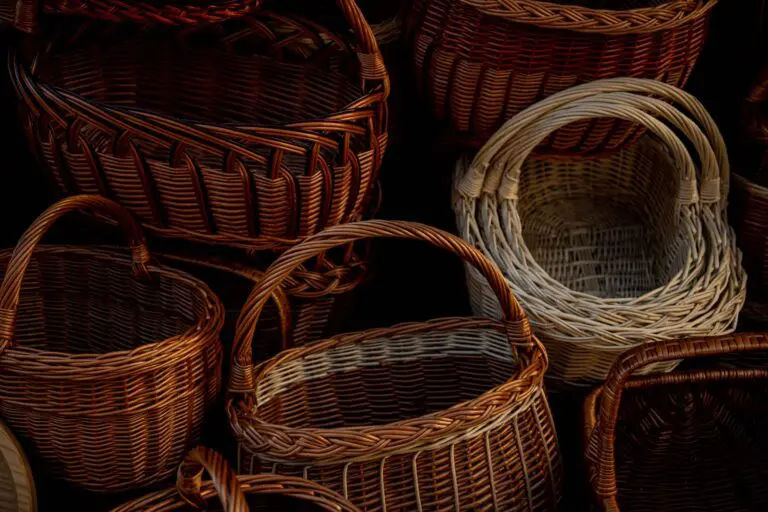
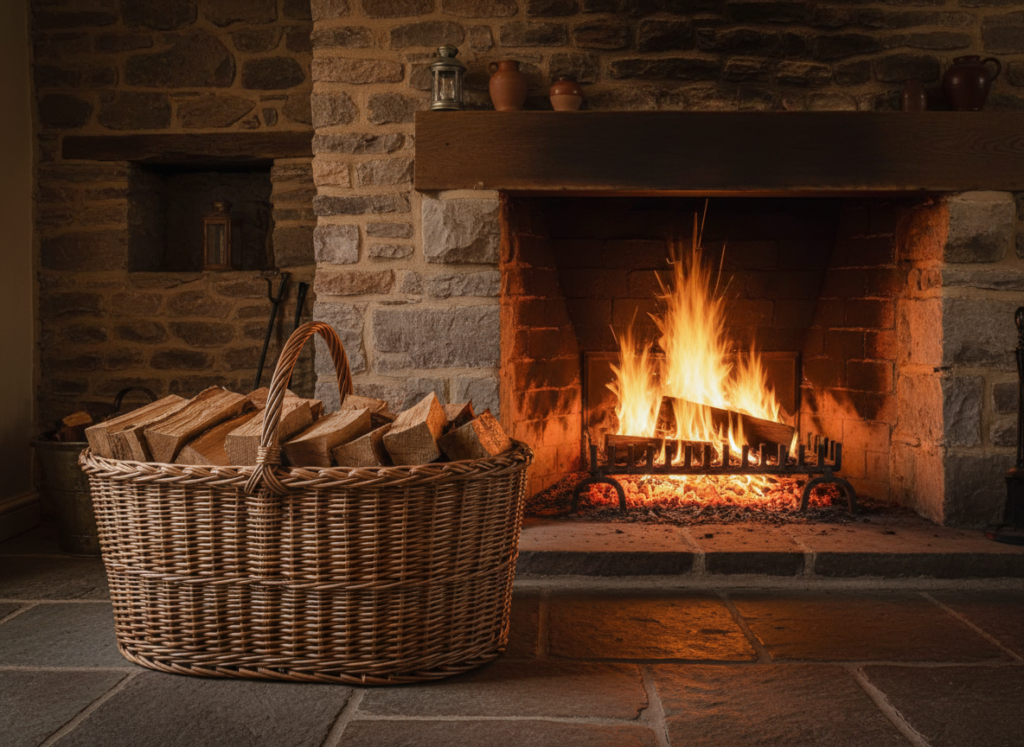
Natural wicker and willow baskets are the most traditional choice for fireside log storage. They look right in most living room settings, they’re strong enough to handle heavy logs, and they breathe well — which matters if your logs aren’t fully seasoned.
The practical consideration with a wicker log basket near a log burner is heat proximity. Position the basket at least 40 to 50 centimetres from the stove body and never directly in front of the door opening. At that distance, a wicker basket is perfectly safe. The heat radiated by a stove at working temperature at that distance is not enough to damage natural wicker.
Lined vs Unlined
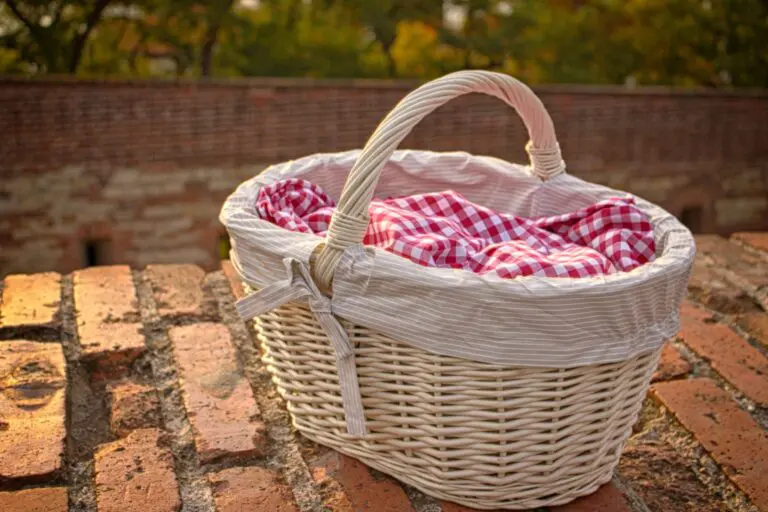
For log storage, an unlined basket is generally preferable. Linings — fabric, leather, or felt — can trap bark debris and make the basket harder to clean. An unlined wicker basket is simpler to tip out and brush down. If your logs are very wet or you want to prevent bark from falling through the weave, a loose removable liner is a more practical option than a fixed one.
Round vs Oval vs Rectangular
The shape of your basket matters for both practical and aesthetic reasons in a log burner setting.
- Round: Takes up equal space in all directions. Good when the basket is placed in a corner or in the centre of a hearth. Can be awkward to fit in a narrow space beside a stove.
- Oval: More versatile. Can be oriented lengthways or widthways depending on the space. A good all-rounder for most log burner settings.
- Rectangular: Best for maximising log capacity in a defined space. Fits neatly alongside a stove in a recess or alcove.
Kindling Storage: Separate Basket or Combined?
Most log burner users need to store both logs and kindling. You can either use a single basket for logs and store kindling elsewhere, or use a dedicated kindling basket alongside your main log basket.
Separate Kindling Basket
A small, separate wicker kindling basket placed beside the main log basket is the most practical arrangement for a log burner. Kindling is lighter and smaller than logs, so it doesn’t need a heavy-duty basket. A small round or oval wicker basket — roughly 25 to 30 centimetres in diameter — holds more than enough kindling for a week’s use.
Keeping kindling and logs separate also makes lighting the stove faster. You’re not digging through logs to find kindling at the bottom of a combined basket.
Combined Log and Kindling Storage
Some baskets are designed with a separate kindling section — a smaller compartment within the main basket body. These are more compact and reduce the number of items on the hearth, but the compartments are often too small for anything beyond a day’s supply of kindling. For regular users, a separate kindling basket is more practical.
Practical note: Rope-handled oval log baskets are a popular choice for log burner users because the rope handle makes them easier to carry when fully loaded, and the oval shape fits naturally beside most stove formats.
Placement Tips for Log Burner Baskets
Getting the position right matters for both safety and aesthetics. Here are the practical rules that most log burner owners settle on after a season of use.
- Keep at least 40cm from the stove body: This is sufficient clearance for most wicker and natural fibre baskets. Closer than this and you risk heat damage over time.
- Position to the side, not in front: The basket should never block access to the stove door. Side positioning also makes loading the stove more natural — you’re not reaching over the basket.
- Hearth depth matters: If your hearth is shallow, measure the depth before buying. A basket that hangs over the hearth edge looks untidy and can be a trip hazard.
- Consider the room flow: Think about how people move around the stove. A basket placed on the side away from the main seating area tends to cause fewer obstructions.
- Keep it stable: Wicker baskets are lighter than metal alternatives. If the floor is polished stone or tile, a round basket may shift when loading. An oval or rectangular basket sits more stably on a flat surface.
How to Choose a Log Burner Basket: Summary
If you’ve read this far, you’re likely choosing between a few specific options. Here’s a simple framework to make the decision.
- Measure your available hearth space beside the stove — length and width. This is your basket’s maximum footprint.
- Check your stove’s recommended log length. Your basket should hold logs of that length without them overhanging.
- Decide whether you want a separate kindling basket or will keep kindling elsewhere.
- Choose the shape — round, oval or rectangular — based on your space and aesthetic preference.
- Check that the basket is unlined or has a removable liner (fixed fabric linings and log storage don’t mix well).
- Confirm the basket has a solid base and secure handle before buying — these are the two points of failure on a heavily-used log basket.